

Return to Map Specimen Database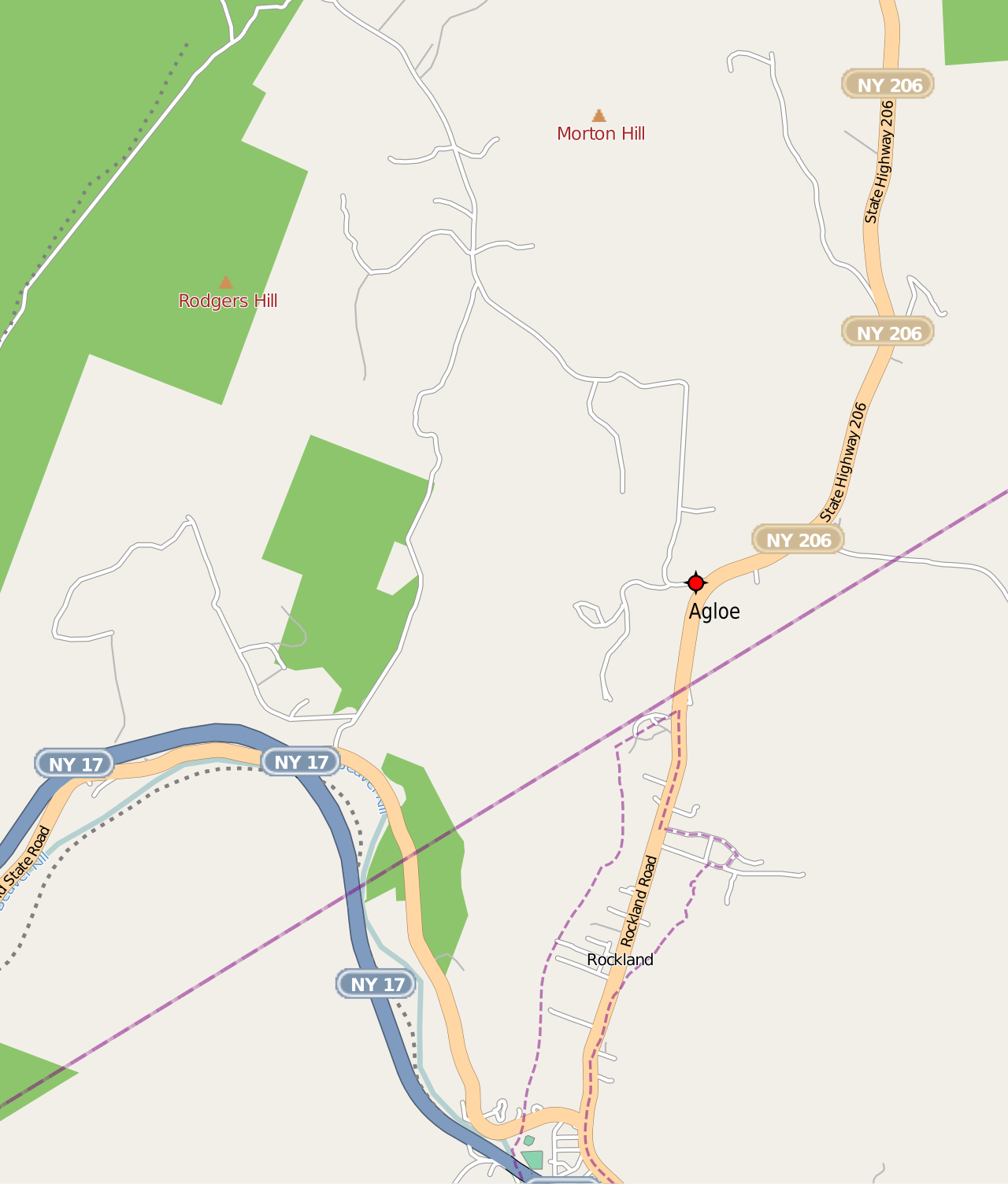
Era: Thematic & Scientific Revolution·Historical mapmaker: Otto G. Lindberg & Ernest Alpers (General Drafting Company)·Year: 1930·Image reuse: CC BY-SA 3.0
Agloe, New York General Drafting Road Map (1930s)
"The copyright trap paper town that materialized into physical reality"
Inserted at an unpaved intersection in Delaware County, NY to detect plagiarism, 'Agloe' became real when a store owner built the 'Agloe General Store' after seeing the name on the map.
Interactive Specimen Pan & ZoomAccession: G3801.P2 1935 .G4
Orientation: North-Up
600 × 450 mm
OpenStreetMap contributors; via Wikimedia Commons·Reproduction·Image source record
ZOOM: 100%Repository Archive
Notable Cartographic Signatures
- The name 'Agloe' printed at the intersection of NY Route 206 and Morton Hill Road
- Esso (Standard Oil) corporate road map cartography
Image credit and reuse
Agloe area — OpenStreetMap map
OpenStreetMap contributors; via Wikimedia Commons
CC BY-SA 3.0 under the individual source record. Metadata added; image pixels unchanged. Display crop may vary by viewport. Retain source credit and terms. Historical mapmaking context is separate from this image reproduction.
The Rhetorical & Ideological Argument
"An intellectual property weapon proving that maps possess the power to conjure physical human settlements into existence through cartographic self-fulfilling prophecy."
Explicit Features
- The name 'Agloe' printed at the intersection of NY Route 206 and Morton Hill Road
- Esso (Standard Oil) corporate road map cartography
Intentional Omissions
- Indication that the town was an artificial copyright watermark
Physical Specimen & Geodesy
Projection:
Lambert Conformal Conic
Orientation Axis:
North-Up
Physical Medium:
Color offset lithograph road map for Esso
Original Physical Dimensions:
600 × 450 mm
Custodial Repository:
Library of Congress / Exxon Archive
Accession: G3801.P2 1935 .G4
Interdisciplinary Context & Connections
Jurisprudence & CadastreTESTS
Copyright Trap Infringement Precedents
Narrative SemioticsPROVES
Ontological Materialization of Fiction
Academic Provenance: General Drafting Company (1935)